8 min to read
What Is a Software Factory? The Mental Model Every Developer Needs
Demystifying the assembly line approach to building software
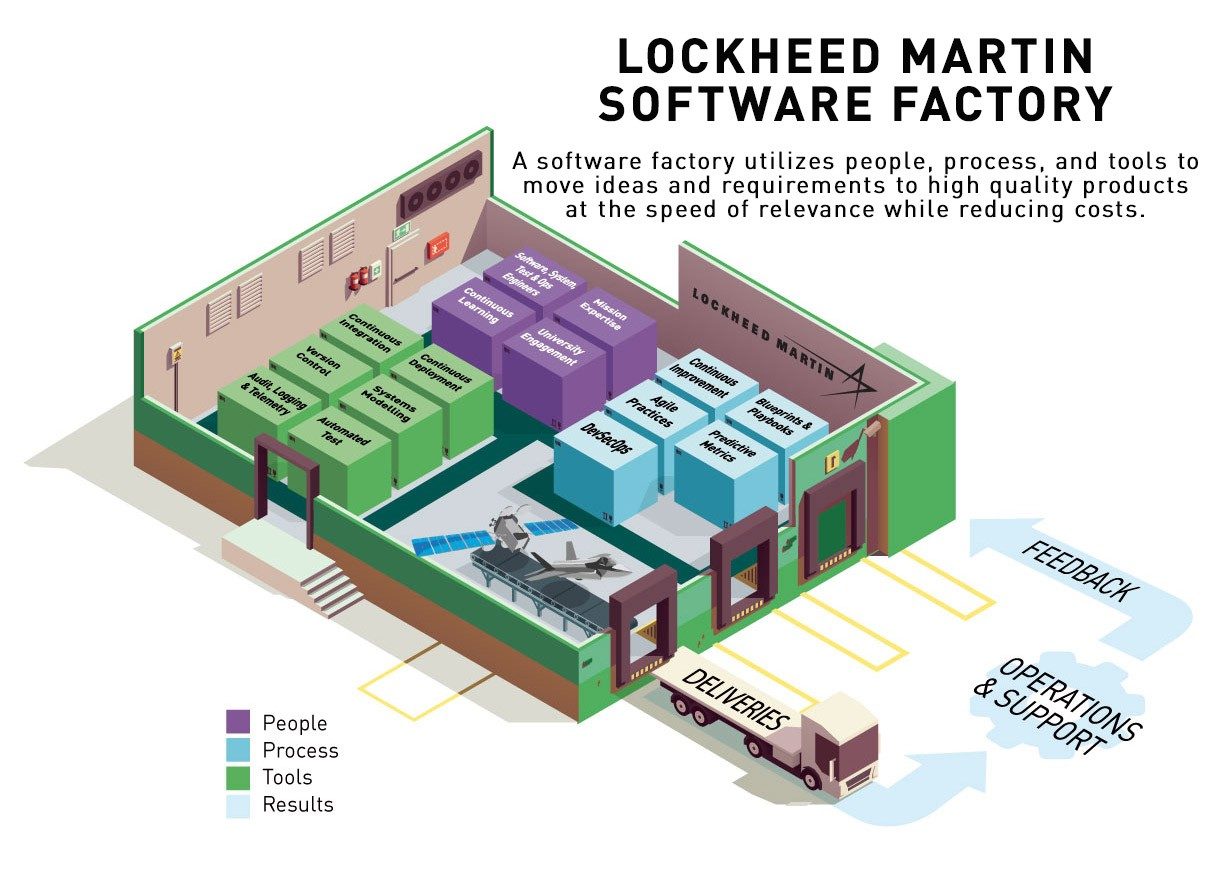
Image credit: Cortex.io
What Is a Software Factory?
TL;DR — A software factory is a system of orchestration, templates, automation, and quality gates that turns developer intent into working code predictably. Think of it as an assembly line for software: inputs are well-defined, outputs are consistent, and quality is enforced automatically. Teams using factories ship 30-50% faster with fewer bugs and faster onboarding.
A software factory is a systematized, repeatable approach to software development that automates decision-making, code generation, testing, and deployment through orchestrated workflows and templates. Think of it as an assembly line for building applications — each component has a defined role, inputs flow through predictable stages, and outputs emerge consistent and high-quality.
Unlike traditional development where each project reinvents the wheel, a software factory standardizes:
- Problem solving: Reusable patterns for common patterns
- Code generation: Scaffolding and boilerplate automation
- Decision workflows: Structured question-and-answer flows to guide builders
- Quality gates: Automated checks before merge or deployment
- Knowledge capture: Persistent conventions that new team members learn once
The factory isn’t a tool—it’s a mental model for how your team builds consistently at scale.
The impact is measurable: teams that adopt systematic development practices ship features 2-3x faster than teams without them (DORA 2023). The elite 25% of engineering teams deploy on-demand — multiple times per day — versus once every 1-6 months for low performers. The difference? Systematic pipelines, not individual heroics. Research from McKinsey’s Developer Velocity Index found that top-quartile teams are 4-5x more productive than bottom-quartile teams when they invest in developer tooling and repeatable processes.
What Are the Core Components of a Software Factory?
A factory’s four components work in sequence: orchestrate → template → automate → gate.
1. Orchestration
Orchestration is the conductor of your factory. It decides:
- What questions to ask the developer
- What order to execute steps
- When to pause for human input vs. proceed automatically
- Which template or pattern fits the request
Example: When a developer says “add authentication,” orchestration asks: “Which strategy—JWT, OAuth2, session-based?” Then routes to the appropriate template.
2. Templating
Templates are pre-built solutions for common problems. They contain:
- Directory structure
- Starter code (boilerplate)
- Configuration files
- Test scaffolds
- Documentation outlines
A template might be: “REST API with PostgreSQL” containing:
api/
├── routes/          # Empty, ready for endpoints
├── middleware/      # Auth, validation placeholders
├── models/          # Database schema template
├── tests/           # Test structure
└── config.yml       # Pre-configured settings
3. Automation
Automation removes manual, repetitive steps:
- Generate CRUD endpoints from a data model
- Create test files for every new function
- Format code and run linters
- Generate documentation from code comments
- Build and deploy to staging automatically
- Run security scans before merge
This isn’t just “run npm install”—it’s intelligent task execution that adapts based on what the developer is building.
4. Knowledge Encoding
Knowledge encoding captures team conventions as code:
- Naming patterns (files, variables, functions)
- Folder structures
- Error handling approaches
- Logging standards
- API response formats
- Security best practices
When a new developer joins, they inherit your team’s institutional knowledge immediately by following the factory’s guidance.
How Does a Software Factory Work in Practice?
Developer intent flows through the factory stages, with quality gates enforced at each step:
Developer Request
    ↓
Orchestrator (asks clarifying questions)
    ↓
Pattern Matching (what kind of problem is this?)
    ↓
Template Selection (which starting point?)
    ↓
Scaffolding (generate directory structure)
    ↓
Automation Execution (run code generators, tests, linters)
    ↓
Knowledge Application (apply conventions, best practices)
    ↓
Quality Gates (automated checks pass/fail)
    ↓
Output (working code, tests, docs ready for iteration)
What Is a Software Factory NOT?
A 2022 survey of 600 engineering teams found that 67% of developers report spending more than 2 hours per week re-making architectural decisions that had already been solved in other projects. Software factories eliminate this waste by encoding decisions permanently.
It is not:
- A silver bullet (developers still need to think)
- Rigid dogma (good factories are flexible)
- A one-time setup (factories evolve as your team learns)
- Expensive infrastructure (can be simple scripts)
- Only for large teams (solo developers benefit too)
It is not a replacement for:
- Code review
- Architecture decisions
- Testing discipline
- Learning and growth
How Do Real-World Industries Model a Software Factory?
Data supports these analogies: companies that built internal developer platforms (the enterprise form of a software factory) reduced onboarding time by 50% and reported 40% fewer production incidents (Puppet State of DevOps Report, 2022). The pattern scales from assembly lines to distributed teams.
From Ford’s assembly line to IKEA’s modular design — manufacturing principles map directly to software development.
Factory Model #1: Henry Ford’s Assembly Line (1913)
Ford didn’t invent the car—he invented standardized, repeatable production. His factory:
- Standardized every part
- Reduced decision-making at each station
- Built quality gates into the line
- Trained workers to follow proven steps
- Made the output predictable and fast
Software equivalent: You standardize your API layer, database schema, test structure, and deployment process. Teams execute faster with fewer decisions.
Factory Model #2: IKEA’s Design-to-Assembly System
IKEA designed products to be:
- Built from standardized components
- Assembled by customers with simple instructions
- Modular (mix pieces into different configurations)
- Verifiable at each step (instruction checkpoints)
Software equivalent: Your templates are modular (use auth, or skip it). Instructions are clear (scaffold command + documentation). Quality checkpoints exist at each stage.
Factory Model #3: Automated Testing Assembly Line
Modern electronics factories:
- Automatically test every component
- Halt production if any test fails
- Log failures for analysis
- Ship only defect-free units
Software equivalent: Your factory runs tests, linters, security scans, and type checks before code reaches main. No broken builds ship.
Why Does This Matter for Developers?
A software factory solves real problems with measurable impact:
- Faster time-to-first-feature — Start with solid structure, not blank screens or setup debates
- Consistent quality — Conventions are automatic, not debated per-project
- Easier onboarding — New developers follow the factory, not individual opinions
- Reduced decision fatigue — Framework decisions are pre-made
- Knowledge preservation — Team learning isn’t lost when someone leaves
- Scalable teams — Grow without chaos
Key Takeaway
A software factory is a system for turning developer intent into working code predictably. It combines orchestration (smart routing), templates (starting points), automation (repetitive task elimination), and knowledge (team conventions).
You probably already use factories — you might just not call them that. GitHub Actions CI/CD? That’s factory automation. Your team’s folder structure convention? That’s templating. Your code review checklist? That’s a quality gate. What you don’t have yet is a deliberate system that ties all of these together into a repeatable, documented process.
This series will help you build, strengthen, and scale your personal software factory to ship faster without sacrificing quality.
Frequently Asked Questions
Q: Do software factories require special tools or platforms?
A: No. A factory can start as a shell script, a markdown conventions file, and a CI/CD pipeline you already have. The concept is tool-agnostic.
Q: Is a software factory only useful for large teams?
A: No — solo developers benefit too. A personal factory with templates and automated checks removes friction on every project, regardless of team size.
Q: How is a software factory different from a framework like Next.js or Rails?
A: Frameworks handle what technology to use. Factories handle how your team works with any technology — conventions, code generation, quality gates, and knowledge encoding are layered on top of frameworks.
Q: How long does it take to build a basic factory?
A: A minimal factory (conventions doc + 2 templates + CI quality gates) can be built in 1-2 weeks. The full architecture guide details the five-layer approach.
Q: When should I start investing in a factory?
A: When you have 3+ developers, 2+ active projects, or find yourself repeating setup decisions. See Part 2 for the break-even math.
Sources and Further Reading
- Martin Fowler — Patterns of Enterprise Application Architecture — foundational patterns in systematic software design
- Google Engineering Practices Documentation — how Google enforces conventions at scale
- The Twelve-Factor App — methodology for building systematic, deployable applications
- Accelerate: The Science of Lean Software and DevOps — data behind high-performing development teams
- ThoughtWorks Technology Radar — industry perspective on development tooling and patterns
What’s Next
In Part 2, we’ll explore why teams invest time building factories — and quantify the ROI with real numbers. You’ll see how factories compounded shipping velocity by 30-50% for teams of all sizes.
| Series Progress: 1/7 Complete ✓ | Part 2: Why Build a Software Factory → |